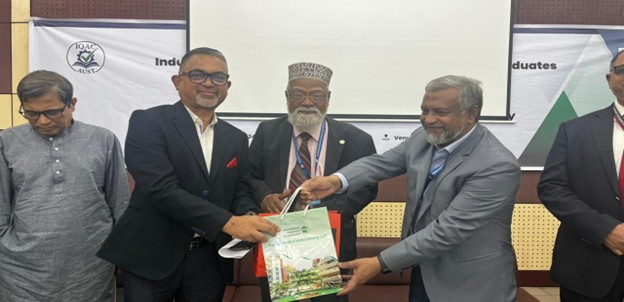
Seminar on “Industry Academy Collaboration for Industry Ready Graduates”
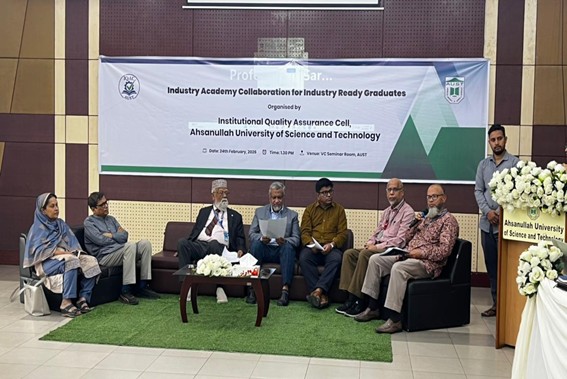
The Institutional Quality Assurance Cell (IQAC) of Ahsanullah University of Science and Technology (AUST) successfully organized a comprehensive seminar titled “Industry Academy Collaboration for Industry Ready Graduates” on Tuesday, February 24, 2026. The seminar was held from 1:30 p.m. to 3:30 p.m. at the VC Seminar Room, Level 4, Block D, AUST.
The primary objective of the seminar was to emphasize the importance of strengthening collaboration between academic institutions and industry in order to produce competent, skilled, and industry-ready graduates. The event brought together distinguished academicians, industry professionals, and university stakeholders to share their insights, experiences, and recommendations on bridging the gap between theoretical education and practical industry requirements.
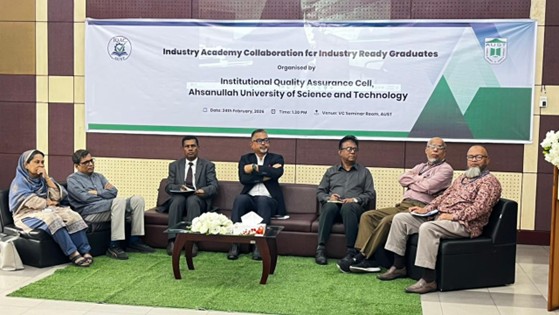
Throughout the session, speakers discussed various critical aspects such as curriculum development aligned with industry needs, the role of internships and hands-on training, the integration of modern technologies, and the importance of research and innovation. The seminar also provided a valuable platform for exchanging ideas on enhancing employability, fostering professional skills, and promoting sustainable academic practices. Overall, the program served as an effective initiative to strengthen industry–academia partnerships and to encourage collaborative efforts for improving the quality and relevance of higher education.
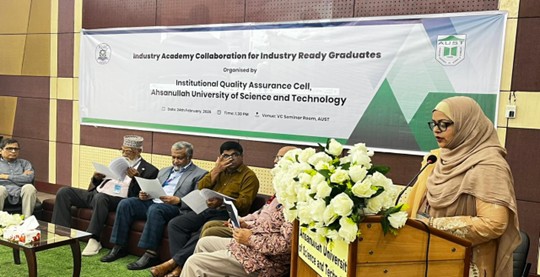
The program formally commenced with an opening address and welcome speech delivered by Dr. Naznin Sultana Chaity, Additional Director, Institutional Quality Assurance Cell (IQAC) and Associate Professor, School of Business.
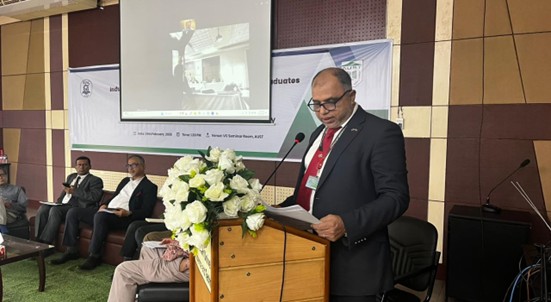
Prof. Dr. Mohammad Sarwar Morshed, Director of the Institutional Quality Assurance Cell (IQAC), AUST, extended a warm and cordial welcome to all participants, distinguished guests, and stakeholders present at the event. He expressed his sincere appreciation for their participation and highlighted the importance of such initiatives in strengthening academic excellence and professional development.
Prof. Morshed emphasized the growing need for strong, effective collaboration between industry and academia to develop industry-ready graduates who can meet the evolving demands of the global job market. He noted that bridging the gap between theoretical knowledge and practical application is essential to producing competent, skilled professionals.
Furthermore, he elaborated on several key academic and professional aspects, including the knowledge domains outlined in the Bangladesh National Qualifications Framework (BNQF) and the implementation of Outcome-Based Education (OBE) in higher education institutions. He also discussed the importance of systematic curriculum design and continuous development to align academic programs with industry requirements and international standards.
In addition, he stressed the significance of fostering ethical standards, teamwork, and effective communication skills among students. He highlighted that these attributes, along with strong professional values, are crucial for shaping responsible graduates who can contribute meaningfully to society and their respective fields. His insightful remarks set a constructive tone for the program and underscored the objectives of enhancing quality education and professional competency.
Mr. Towhidur Rahman Rad, Senior Executive at Walton, delivered an insightful speech highlighting various collaborative opportunities between industry and academia. In his remarks, he elaborated on the significance of academic fellowship initiatives that aim to strengthen knowledge exchange and professional development among students and faculty.
He discussed the importance of structured industrial internship programs in providing students with practical exposure and hands-on experience, enabling them to better understand real-world industrial environments. He also emphasized the value of engaging students and faculty in joint research and development (R&D) projects, which can foster innovation and help solve industry-relevant challenges.
Furthermore, Mr. Rad highlighted the role of industry advisory support in guiding academic institutions to align their curricula with current industry needs. He noted that active collaboration in curriculum development can ensure that graduates are equipped with relevant and up-to-date skills. He also spoke about the importance of industry-based hands-on training programs that enhance technical competencies and bridge the gap between theoretical learning and practical application.
In addition, he introduced initiatives such as global design partnerships, which provide opportunities for students to engage in international-level projects and collaborations. He also mentioned the campus ambassadors program, designed to create leadership opportunities and strengthen industry–student engagement. Concluding his remarks, he emphasized that these initiatives collectively contribute to accelerating students’ career development and preparing them for competitive professional environments.
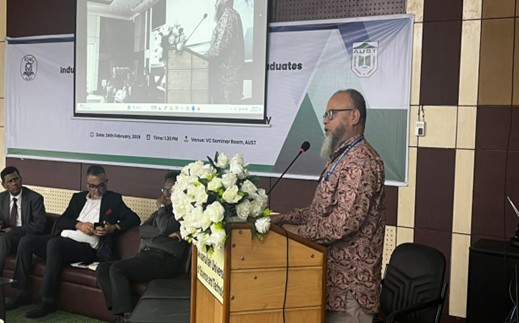
Dr. Khondaker Abdullah Al-Mamun, UIU, delivered a thought-provoking speech focusing on strengthening the relationship between academia and industry. In his address, he emphasized the need to incorporate at least 20% of industrial faculty members into academic institutions to ensure that students gain practical insights alongside theoretical knowledge. He highlighted that the involvement of industry professionals in teaching can significantly enhance the quality of education and better prepare students for real-world challenges.
He further stressed the importance of establishing strong and sustainable industry–academia collaborations. According to him, such partnerships play a crucial role in bridging the gap between academic learning and industry requirements, fostering innovation, and promoting skill development aligned with market demands.
In addition, Dr. Al-Mamun discussed the growing importance of integrating artificial intelligence (AI) tools into education and professional practices. He noted that the effective use of AI technologies can enhance learning outcomes, improve research capabilities, and increase efficiency in both academic and industrial settings. He encouraged institutions to adopt modern technological tools and adapt to the rapidly changing digital landscape. Overall, his remarks underscored the need for a more practical, technology-driven, and collaborative approach to higher education in order to produce competent and future-ready graduates.
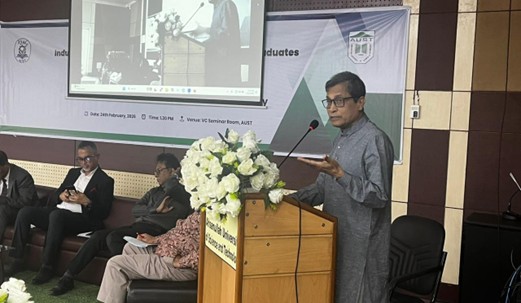
Engr. Md. Hasmotuzzaman, Managing Director of Utility Professionals Building MEP Services, Banasree, Dhaka, delivered an engaging speech focusing on professional growth and industry collaboration. In his address, he emphasized the importance of developing leadership qualities among students, encouraging them to aspire beyond conventional career paths and aim for top executive roles such as Chief Executive Officer (CEO). He highlighted that with proper guidance, determination, and skill development, graduates can achieve significant leadership positions in their respective industries.
He also stressed the critical importance of English language proficiency in today’s globalized professional environment. According to him, strong English communication skills are essential for effective interaction in multinational workplaces, professional documentation, and career advancement opportunities both locally and internationally.
Furthermore, Engr. Hasmotuzzaman underscored the value of strengthening alumni positions and networks to enhance industry–academia collaboration. He noted that successful alumni working in various industries can play a vital role in bridging the gap between academic institutions and the professional world by offering mentorship, internship opportunities, and career guidance to current students.
Overall, his remarks highlighted the need for leadership development, effective communication skills, and strong alumni engagement to foster meaningful industry collaboration and support students’ career advancement.
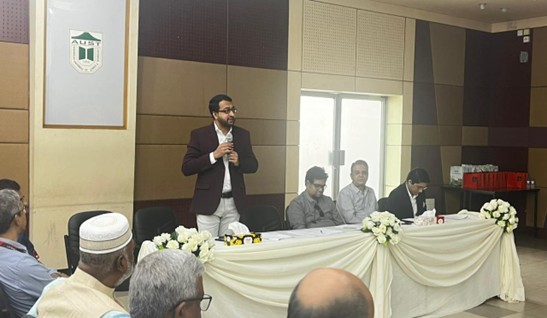
Dr. Shamsuddin Ahmed from IUT delivered an insightful speech emphasizing the importance of developing strong problem-solving abilities among students. In his address, he highlighted that, in today’s rapidly evolving world, graduates must be equipped not only with theoretical knowledge but also with the ability to analyze and solve real-world problems effectively.
He stressed the growing significance of artificial intelligence (AI) skills, noting that familiarity with modern AI tools and technologies has become essential across various fields. According to him, integrating AI competencies into education can significantly enhance students’ analytical capabilities and prepare them for future challenges in both academia and industry.
Dr. Ahmed also emphasized the critical role of research in higher education. He encouraged students and institutions to actively engage in research activities that bridge the gap between theory and practical application. He pointed out that academic learning should not remain confined to textbooks but should be extended to addressing real-world issues through innovative thinking and experimentation.
Furthermore, he highlighted the importance of adequate research funding to support quality research initiatives. He noted that sufficient financial support enables institutions and researchers to undertake meaningful projects, contribute to knowledge creation, and develop practical solutions to industry and societal problems. Overall, his remarks underscored the need for a balanced approach that integrates problem-solving skills, AI expertise, and research-driven learning to produce competent and future-ready graduates.
Mr. Md. Kamal Uddin, Deputy General Manager (DGM) of Akij Motors, delivered a practical, thought-provoking speech on students’ current mindset and the need to shift learning approaches. In his address, he observed that many students today tend to pursue their studies primarily to secure jobs, rather than to acquire knowledge and develop a deep understanding of their fields.
He emphasized that education should not be limited to obtaining certificates or employment opportunities, but should instead focus on learning, curiosity, and skill development. He highlighted the importance of project-based learning, which enables students to apply theoretical concepts to real-world situations and enhances their problem-solving skills.
Mr. Uddin also stressed the crucial role of internship programs in shaping students’ professional competencies. He noted that internships provide valuable industry exposure, helping students understand workplace dynamics, develop practical skills, and build confidence. He encouraged institutions to motivate students to actively participate in internships and practical training opportunities.
Furthermore, he pointed out that proper motivation and guidance are essential to inspire students to move beyond a job-oriented mindset and focus on becoming skilled and knowledgeable professionals. He concluded by reiterating that hands-on experience through projects and internships is key to preparing students for successful careers.
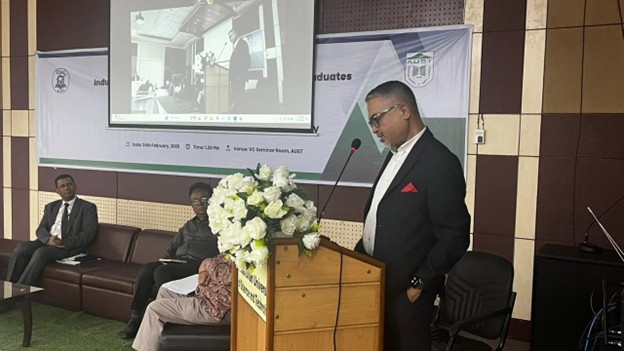
Mr. Raihan Ur Rashid from Cybernetics Hi-Tech Solutions (Pvt.) Ltd. delivered an important and practical speech addressing existing gaps between academic preparation and industry requirements. In his remarks, he pointed out that many students lack fundamental computer operation skills, which creates challenges when they enter professional environments. He emphasized that this deficiency underscores the urgent need to improve basic technical competencies at the early stages of education.
He also observed that collaboration between industry and academia remains insufficient and ineffective, particularly at the early stages of academic programs. According to him, this gap limits students’ exposure to real-world practices and industry expectations. He stressed the importance of reviewing and updating curricula to better align with current industry needs and technological advancements.
Furthermore, Mr. Rashid suggested that structured industry engagement should begin from the third year of study. He recommended incorporating regular factory visits, office visits, and direct industry interaction into academic programs so that students can gain firsthand experience of professional environments.
In addition, he highlighted the need to organize problem-solving workshops focused on real-life industrial challenges. Such initiatives, he noted, would help students develop critical thinking skills, enhance their practical knowledge, and better prepare them for their future careers.
Overall, his remarks underscored the need to strengthen basic technical skills, improve curriculum alignment, and foster early and continuous industry engagement to bridge the gap between education and employment.
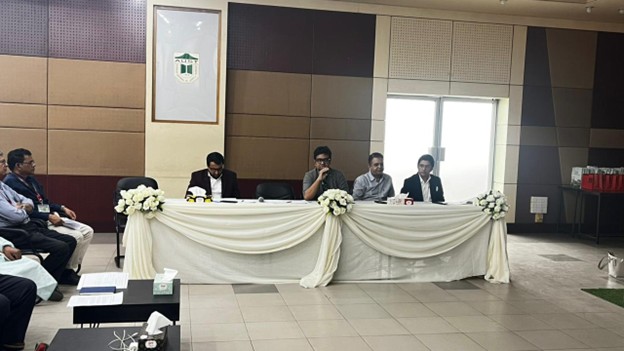
Mr. Sorodas Deb Roy from Penta Global Ltd delivered an insightful speech emphasizing the importance of practical skill development alongside academic learning. In his address, he highlighted the need to organize regular workshops that enhance students’ hands-on experience and industry-relevant competencies.
He stressed the importance of developing strong problem-solving skills, noting that students should be trained to analyze real-world challenges and propose effective, practical solutions. According to him, such abilities are essential for success in professional environments where critical thinking and adaptability are highly valued.
Furthermore, Mr. Roy underscored the importance of report-writing skills, explaining that clear, structured documentation is a fundamental requirement in both academic and professional settings. He encouraged institutions to provide proper guidance and training in technical and formal report writing to ensure that students can communicate their ideas effectively.
He also highlighted the need for students to become familiar with official rules, regulations, and workplace protocols. Understanding professional standards, organizational procedures, and ethical practices, he noted, is crucial for smooth integration into the corporate environment.
Overall, his remarks emphasized the importance of workshops, practical problem-solving, effective communication through report writing, and awareness of professional rules to better prepare students for their future careers.
Professor Dr. M. Shamsul Alam from DIU delivered a thoughtful speech addressing key challenges in the higher education system and the role of regulatory bodies. In his remarks, he highlighted the importance of the University Grants Commission (UGC) in overseeing and ensuring the quality of higher education in the country. He emphasized that UGC should play a more active role in identifying and addressing the real problems students face.
He pointed out that many student-related issues, including academic pressure, limited practical exposure, and limited access to resources, often go unaddressed due to gaps in policy implementation and monitoring. According to him, a more student-centered approach is necessary to improve the overall quality of education and learning outcomes.
Furthermore, Professor Alam expressed concern about the lack of a clear benchmark between universities and students regarding academic expectations, skill development, and performance standards. He noted that without well-defined benchmarks and evaluation criteria, it becomes difficult to measure progress and ensure consistency in educational quality across institutions.
He suggested that establishing standardized benchmarks and strengthening coordination between universities, students, and regulatory authorities would help create a more effective and transparent education system. Overall, his remarks underscored the need for improved governance, student-focused policies, and clear performance standards in higher education.
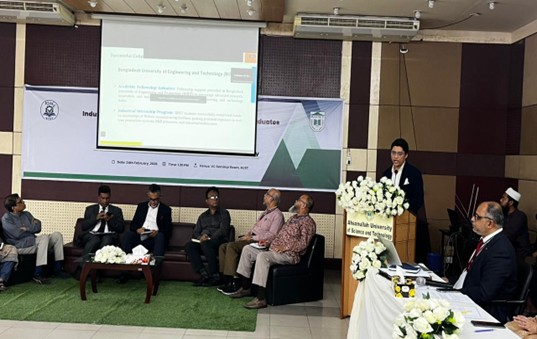
Dr. A.K.M. Masud delivered an informative speech focusing on the importance of strengthening academic infrastructure and support systems to enhance the overall quality of education. In his address, he highlighted the role of effective academic logistics in ensuring smooth and efficient educational operations, including proper resource management, scheduling, and administrative support.
He emphasized the need for curriculum-related activities that go beyond traditional classroom teaching. According to him, incorporating co-curricular and extra-curricular academic activities can significantly enrich students’ learning experiences and help them develop practical skills alongside theoretical knowledge.
Furthermore, Dr. Masud discussed the potential benefits of introducing joint degree programs in collaboration with international institutions. He noted that such initiatives can provide students with global exposure, enhance academic standards, and increase opportunities for cross-cultural learning and research collaboration.
He also stressed the importance of developing well-structured career centers within universities. He explained that dedicated career support services can play a vital role in guiding students in career planning, skill development, job placement, and industry engagement.
Overall, his remarks highlighted the need for improved academic logistics, enriched curriculum-related activities, international collaboration through joint degrees, and strong career support systems to better prepare students for future professional challenges.
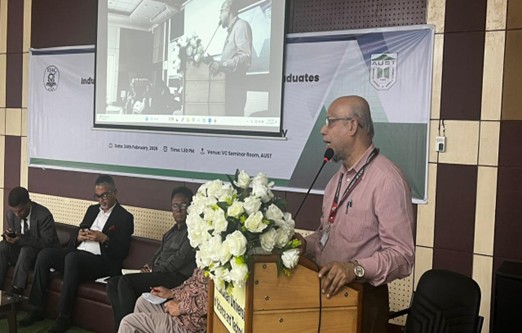
Prof. Dr. Abdul Matin, Dean of the Faculty of Engineering at AUST, delivered a significant speech emphasizing the importance of enhancing practical knowledge in engineering education. In his address, he highlighted that while theoretical understanding is essential, it must be complemented by hands-on experience to produce competent, industry-ready graduates.
He stressed the need for continuous improvement and curriculum updates to ensure alignment with current industry demands and technological advancements. According to him, an effective curriculum should integrate both theoretical concepts and practical applications, enabling students to gain a comprehensive understanding of their field.
Furthermore, he emphasized the importance of providing students with access to modern tools, equipment, and technologies. He noted that familiarity with industry-standard tools and software is crucial for developing technical proficiency and increasing employability.
Prof. Matin also encouraged incorporating laboratory work, project-based learning, and real-world problem-solving activities into academic programs. He stated that such approaches would help students build confidence, enhance their technical skills, and better prepare them for professional challenges. Overall, his remarks underscored the need to strengthen practical learning, modernize curricula, and ensure access to appropriate tools and technologies in order to improve the quality of engineering education.
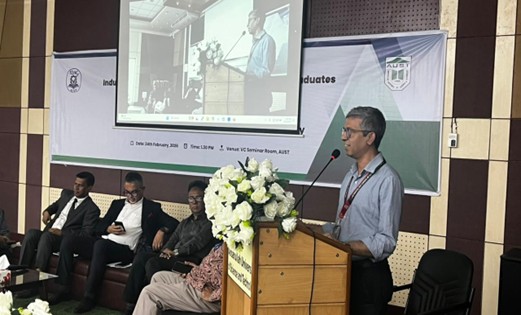
Dr. Farida Nilufar, Dean of the Faculty of Architecture, delivered a thoughtful speech emphasizing the need for continuous improvement in the academic system. In her address, she highlighted that institutions must take proactive steps to address existing challenges and work collaboratively towards enhancing the quality of education.
She stressed the importance of evaluating current academic practices and identifying areas that require development. According to her, it is essential for universities to adopt a progressive mindset and remain committed to ongoing improvement in teaching, learning, and research activities.
Furthermore, Dr. Nilufar emphasized the value of comparing local academic standards with those of foreign universities. She noted that benchmarking against internationally recognized institutions can yield valuable insights into best practices, innovative teaching methods, and advanced curricula. Such comparisons, she explained, can help local universities identify gaps and implement necessary changes to achieve global standards.
Overall, her remarks highlighted the importance of continuous effort, self-assessment, and international benchmarking to enhance the quality and competitiveness of higher education.
Prof. Dr. S.M. Shafiul Alam, Dean of the Faculty of Business and Social Science, delivered an insightful speech highlighting the importance of engaging students in diverse activities in collaboration with industry. In his address, he emphasized that academic learning should be complemented by a range of co-curricular and industry-linked activities to ensure students’ holistic development.
He discussed the need to organize different types of collaborative initiatives with industry partners, such as seminars, workshops, training programs, case studies, and real-world project involvement. According to him, these activities provide students with valuable exposure to practical business environments and help them understand current market trends and professional expectations.
Furthermore, he highlighted that active participation in such industry-oriented activities can enhance students’ analytical abilities, communication skills, and professional competencies. He also noted that these engagements create opportunities for networking, mentorship, and career advancement.
Overall, his remarks underscored the importance of integrating a variety of industry-related activities into academic programs to bridge the gap between theoretical knowledge and practical application, and to prepare students for successful careers.
14) Prof. Dr. Muhammad Mohiuddin, Member of the Board of Trustees of AUST, delivered a meaningful speech highlighting the interconnected roles of teachers, industry, and students in the overall development of the education system. In his address, he emphasized that teachers play a crucial role in shaping students’ knowledge, skills, and professional attitudes, and that they must therefore continuously update themselves to meet modern academic and industry standards.
He stressed the importance of strengthening collaboration between teachers and industry to ensure that academic instruction remains relevant and aligned with real-world demands. According to him, active engagement with industry can help educators gain practical insights that can be effectively incorporated into teaching methodologies and curriculum design.
Furthermore, he highlighted that students should approach their studies with dedication and a genuine desire to learn, rather than focusing solely on academic results. He encouraged students to actively participate in practical learning, skill development, and industry-related activities to enhance their competencies.
Overall, his remarks underscored the need for a balanced, collaborative approach among teachers, industry, and students to create a more effective, relevant, and future-oriented education system.
Prof. Dr. Sharmin Reza Chowdhury, Pro Vice-Chancellor (In-charge) and Treasurer of AUST, delivered an insightful speech focusing on the importance of curriculum development in the context of accreditation and industry relevance. In her address, she emphasized that a well-structured, standardized curriculum is essential for achieving and maintaining accreditation, which serves as a benchmark for quality education.
She highlighted that accreditation processes require continuous evaluation and improvement of academic programs to meet national and international standards. According to her, aligning curricula with accreditation requirements not only enhances institutional credibility but also ensures that graduates are equipped with the necessary competencies and skills.
Furthermore, she stressed the importance of maintaining a strong relationship with the industry while designing and updating academic curricula. She noted that active industry involvement helps institutions understand current market demands and technological advancements, enabling them to incorporate relevant knowledge and practical skills into their programs.
Prof. Chowdhury also noted that integrating industry perspectives into curriculum development can significantly enhance employability and prepare students for real-world challenges. Overall, her remarks underscored the need for a balanced approach that combines accreditation standards with industry collaboration to ensure high-quality, relevant, and outcome-oriented education.
Prof. Dr. A.K.M. Baki from the Department of Electrical and Electronic Engineering (EEE), AUST, delivered a thoughtful speech emphasizing the importance of deeper engagement between academia and industry. In his address, he highlighted the need for more frequent and meaningful discussions focused on industry-related issues and challenges.
He stressed that academic institutions should actively explore real-world industrial problems and incorporate them into teaching, learning, and research activities. According to him, such an approach would enable students to develop practical problem-solving skills and gain a clearer understanding of industry expectations.
Furthermore, Prof. Baki emphasized that collaborative problem-solving between academia and industry can lead to innovative solutions that benefit both sectors. He noted that universities should not only focus on theoretical knowledge but also encourage students and faculty to address practical challenges faced by industry.
He also suggested organizing regular forums, workshops, and interactive sessions where industry professionals and academic stakeholders can exchange ideas and address mutual concerns. Overall, his remarks underscored the importance of strengthening dialogue and collaboration between industry and academia to solve real-life problems and enhance the effectiveness of higher education.
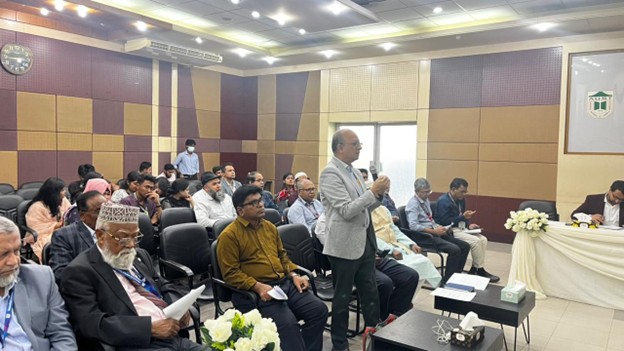
Prof. Qumrul Ahsan from AUST delivered an insightful speech highlighting the importance of both theoretical knowledge and practical application in higher education. In his address, he emphasized that while acquiring academic knowledge is essential, it must be complemented by practical knowledge to ensure that students are fully prepared to face real-world challenges.
He stressed the need for a problem-focused approach to education, encouraging students to identify, analyze, and solve real-life issues. According to him, such an approach fosters critical thinking, innovation, and a deeper understanding of subject matter.
Furthermore, Prof. Ahsan discussed the concept of microcredit and its role in socio-economic development. He noted that understanding microcredit systems can provide students with insights into entrepreneurship, financial inclusion, and community-based economic activities. He encouraged incorporating practical, socially relevant topics into academic discussions and learning processes.
Overall, his remarks underscored the importance of integrating knowledge with practical experience, adopting a problem-solving mindset, and exploring innovative concepts like microcredit to enhance students’ academic and professional growth.
Prof. Dr. A.N. Mustafizul Karim from the Department of Mechanical and Production Engineering (MPE), AUST, delivered an insightful speech focusing on the importance of integrating internships with academic education to promote sustainable development. In his address, he emphasized that internships play a crucial role in bridging the gap between theoretical learning and practical application, enabling students to gain real-world experience and industry exposure.
He highlighted that a well-structured education system should incorporate internship opportunities as a core component, allowing students to apply their academic knowledge in professional settings. According to him, such experiences not only enhance technical skills but also develop professional attitudes, adaptability, and problem-solving capabilities.
Furthermore, Prof. Karim stressed the importance of sustainability in education and professional practice. He noted that institutions should focus on developing environmentally conscious and socially responsible graduates who can contribute to sustainable industrial growth and development.
He encouraged integrating sustainable practices into both the curriculum and internship programs, ensuring that students are aware of the long-term impacts of their work on society and the environment. Overall, his remarks highlighted the need for a balanced approach that combines education, practical experience through internships, and sustainability to prepare students for future challenges.
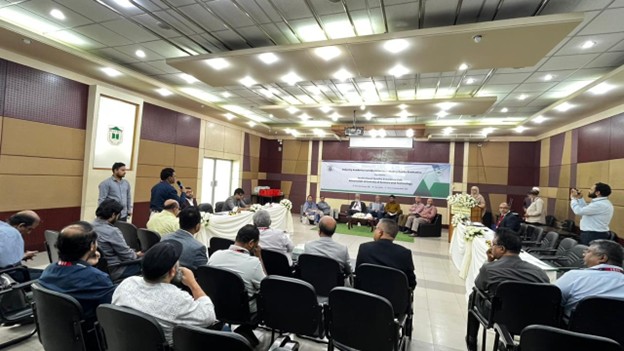
The Hon’ble Vice-Chancellor, Professor Dr. Md. Ashraful Hoque of AUST, delivered the speech where he highlighted the importance of fostering strong and effective relationships among teachers, students, and industry. In his address, he emphasized that a collaborative approach involving these three key stakeholders is essential for ensuring quality education and producing competent graduates.
He shared his valuable experiences from both academic and professional fields, reflecting on the evolving nature of education and the growing need for alignment with industry demands. He noted that mutual understanding and cooperation between teachers and industry professionals can significantly enhance the learning environment for students and better prepare them for real-world challenges.
Furthermore, he expressed his appreciation for the active participation and valuable contributions of all speakers, guests, and attendees. He extended his sincere thanks to everyone involved in organizing and participating in the program, acknowledging their efforts in making the event successful and meaningful.
Overall, his remarks brought the program to a thoughtful conclusion, reinforcing the importance of collaboration, shared experiences, and collective efforts in advancing the quality of higher education.
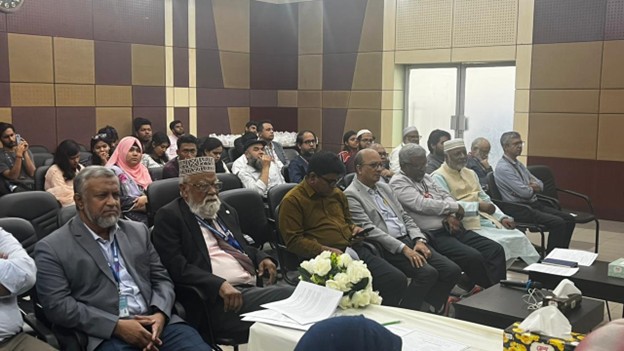
The seminar concluded with closing remarks delivered by Prof. Dr. Mohammad Sarwar Morshed. In his concluding speech, he expressed his sincere gratitude to all participants for their active and enthusiastic involvement throughout the program. He acknowledged the valuable contributions of the speakers, guests, and organizers, whose collective efforts ensured the seminar’s success.
Overall, his remarks brought the seminar to a meaningful close, reinforcing the significance of collaboration, continuous learning, and professional development in advancing the quality of education.